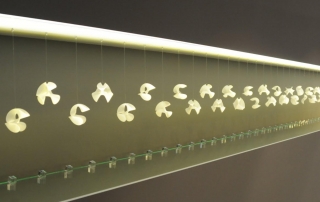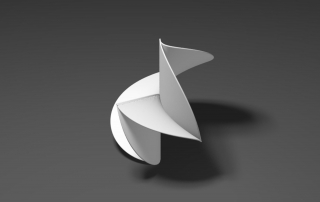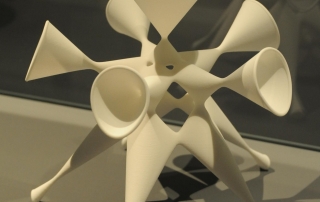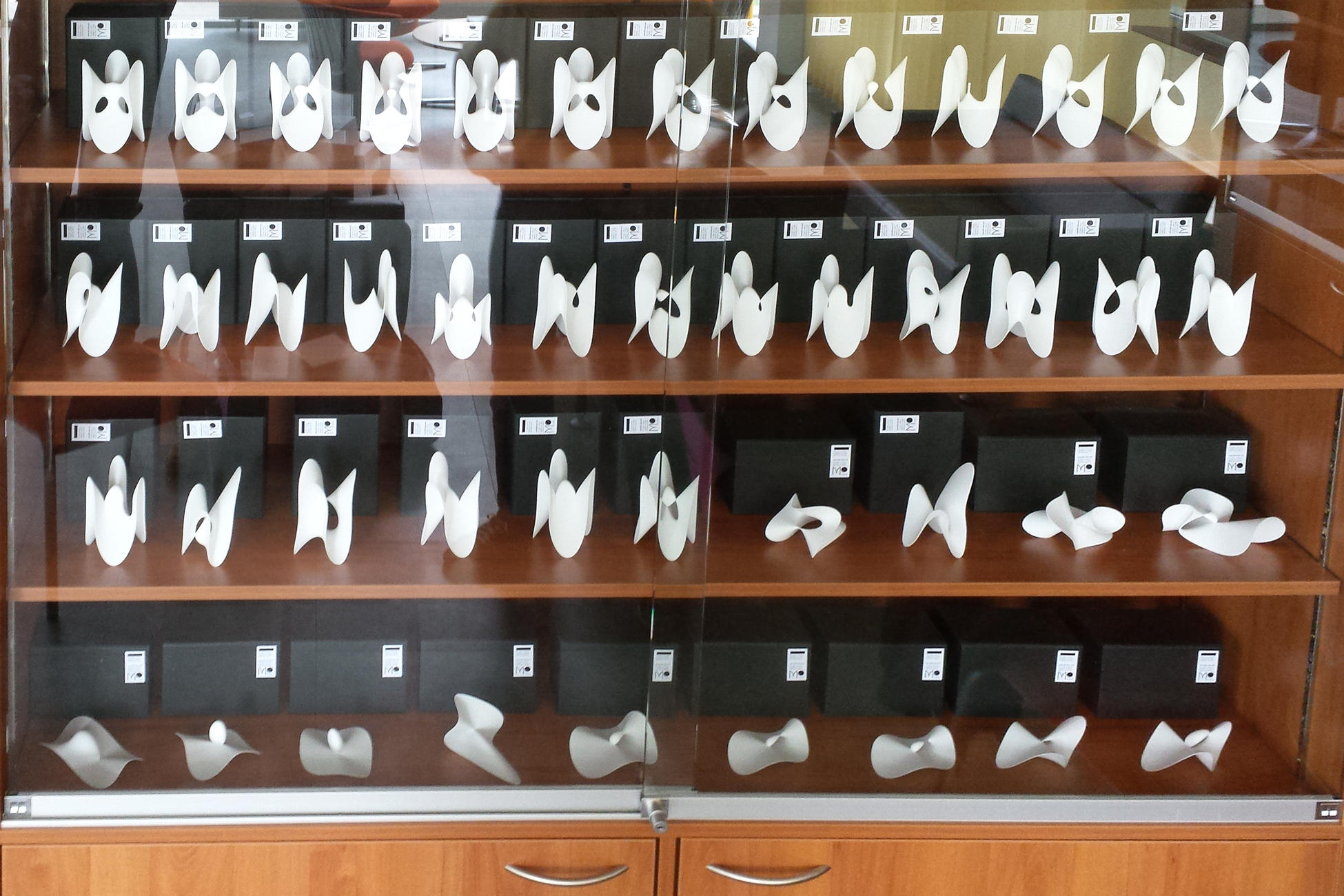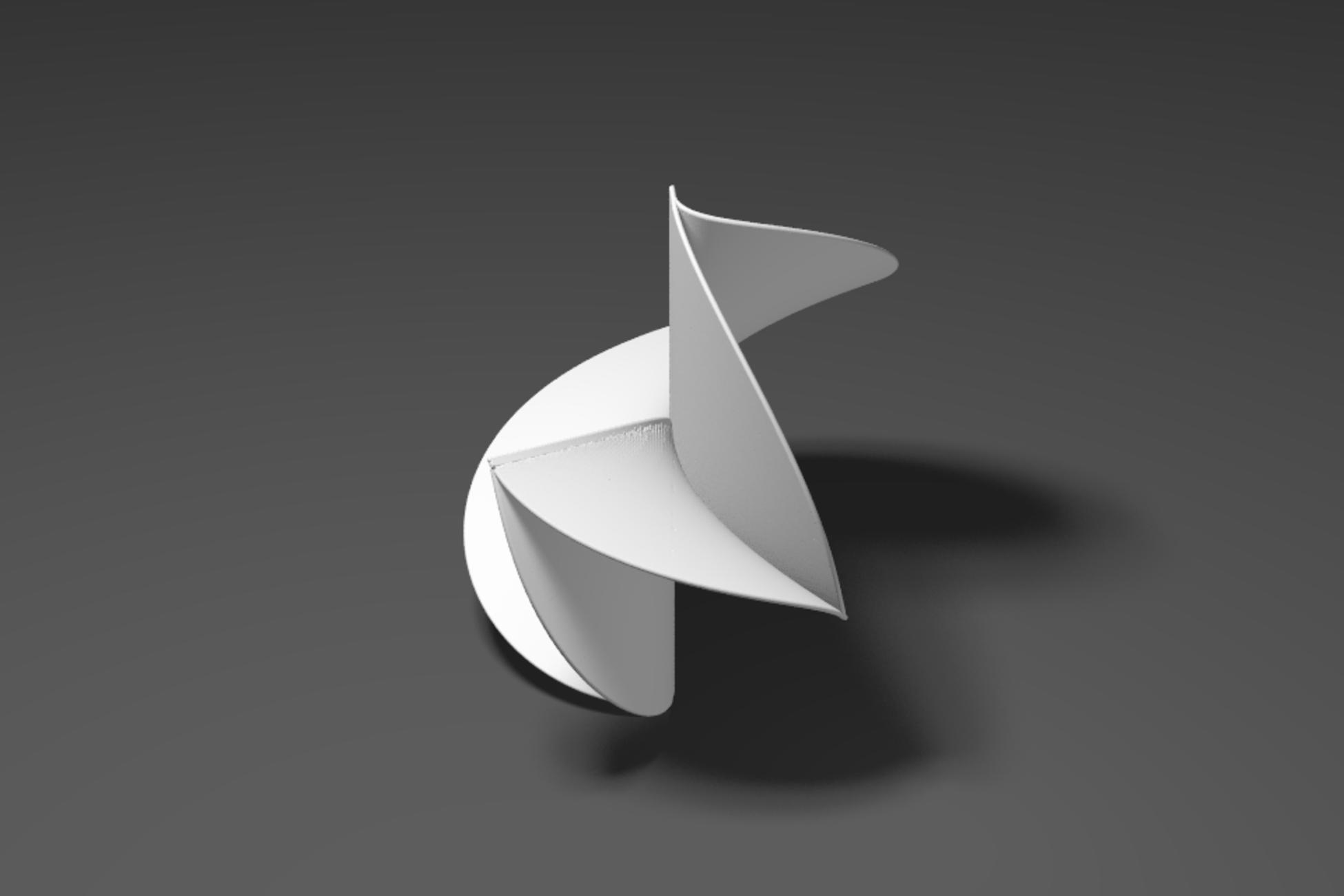
45 cubics, series II (cylinder cut), 12cm
The complete series of 45 types of cubic surfaces with only finitely many singularities and lines. We provide links to put a complete set of several cubic surface models into your shopping cart.
The complete series of 45 types of cubic surfaces with only finitely many singularities and lines. We provide links to put a complete set of several cubic surface models into your shopping cart.
The complete series of 45 types of cubic surfaces with only finitely many singularities and lines. We provide links to put a complete set of several cubic surface models into your shopping cart.
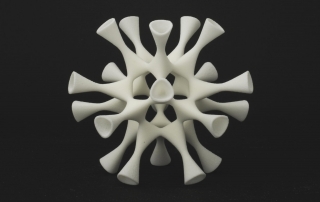
The Barth Sextic is probably the most famous example of the sometimes so-called world record surfaces. This post shows a smoothed variant of it.
In the 19th century Sylvester described a surface for studying the number of real roots of a polynomial. Henrici later constructed a model of this. This is a modern version.
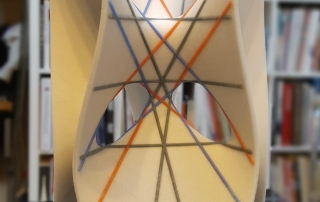
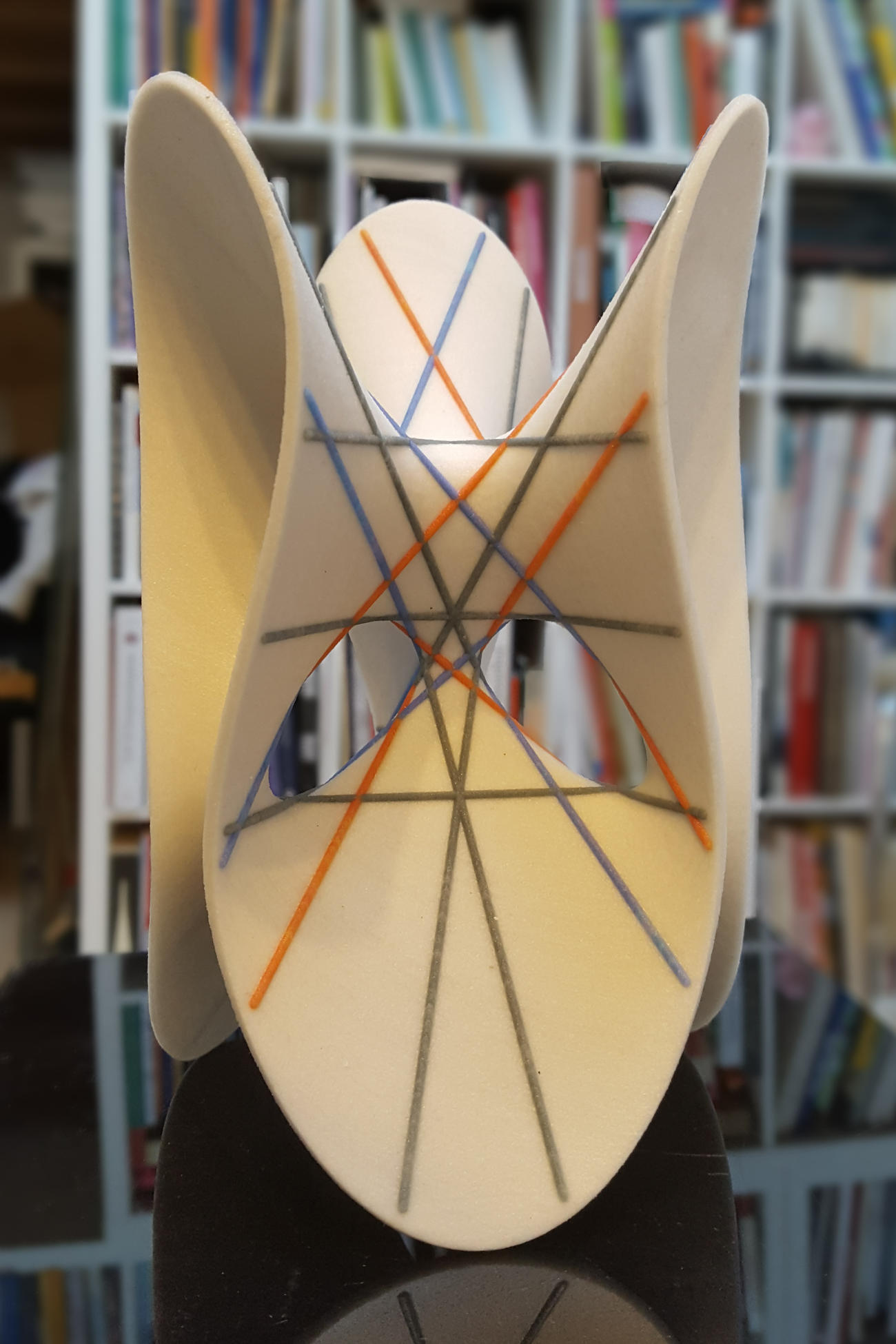
This version of Clebsch's famous diagonal surface model features colored lines. One intersects the surfaces in a line and a hyperbola, the another one in three lines.
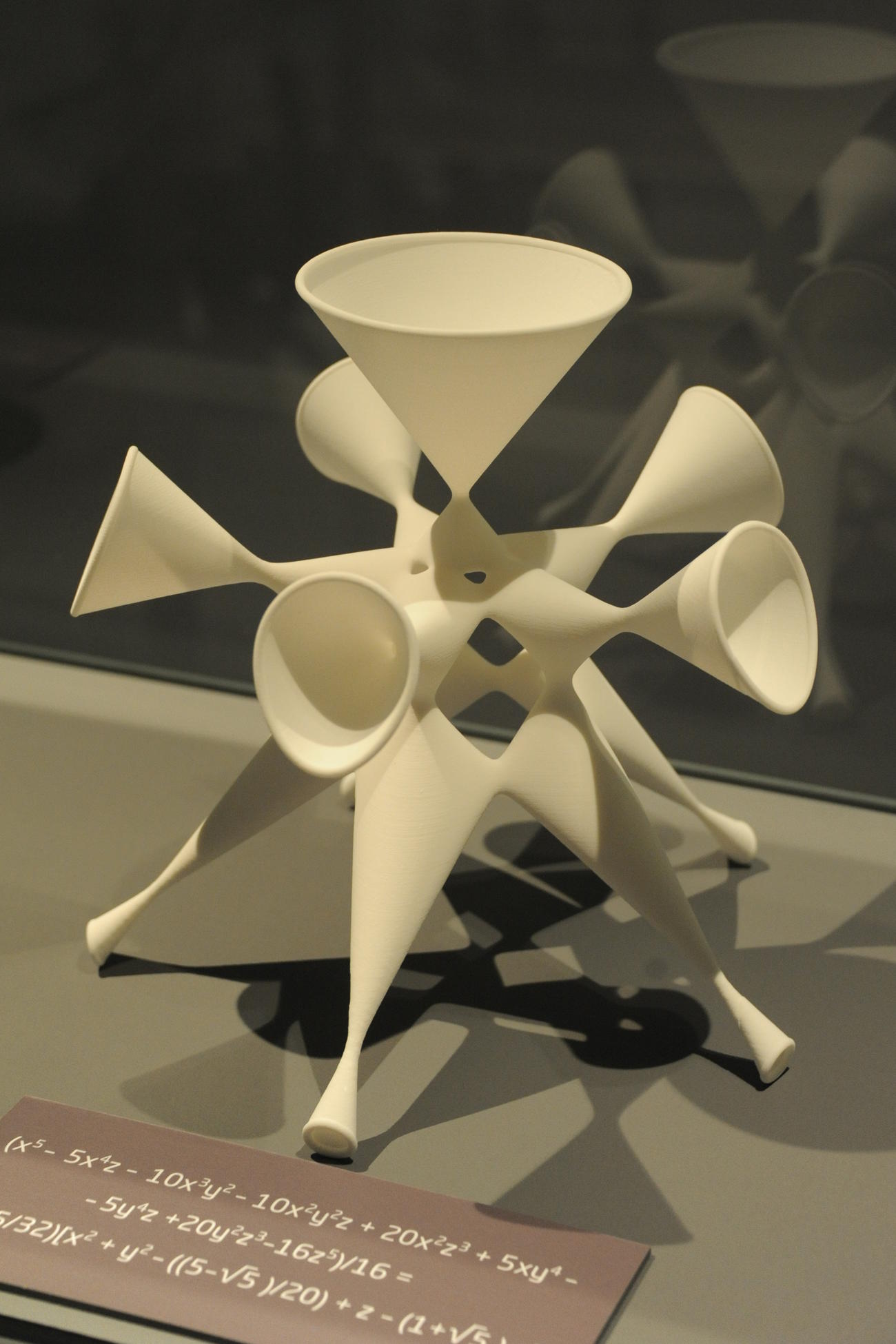
A Togliatti quintic surface is a so-called world record surface. Among all quintic surfaces, it has the maximum possible number of singularities, namely 31. Our model is a smoothed version of such a surface.
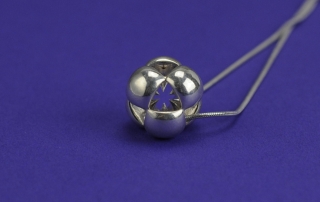
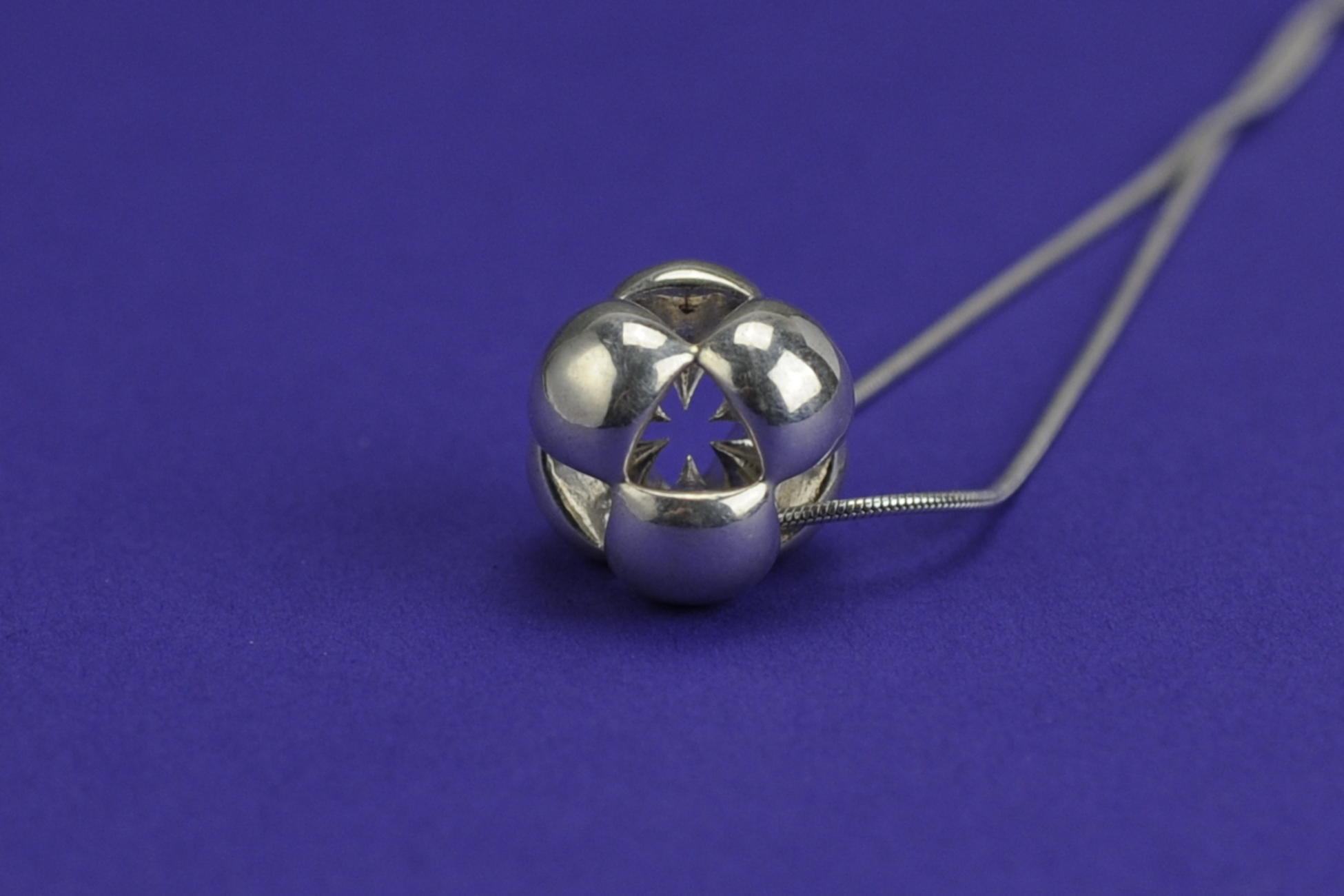
The shape of our "four pillows meet pendant" is given by a single mathematical equation. Have you ever seen a pendant like this before?
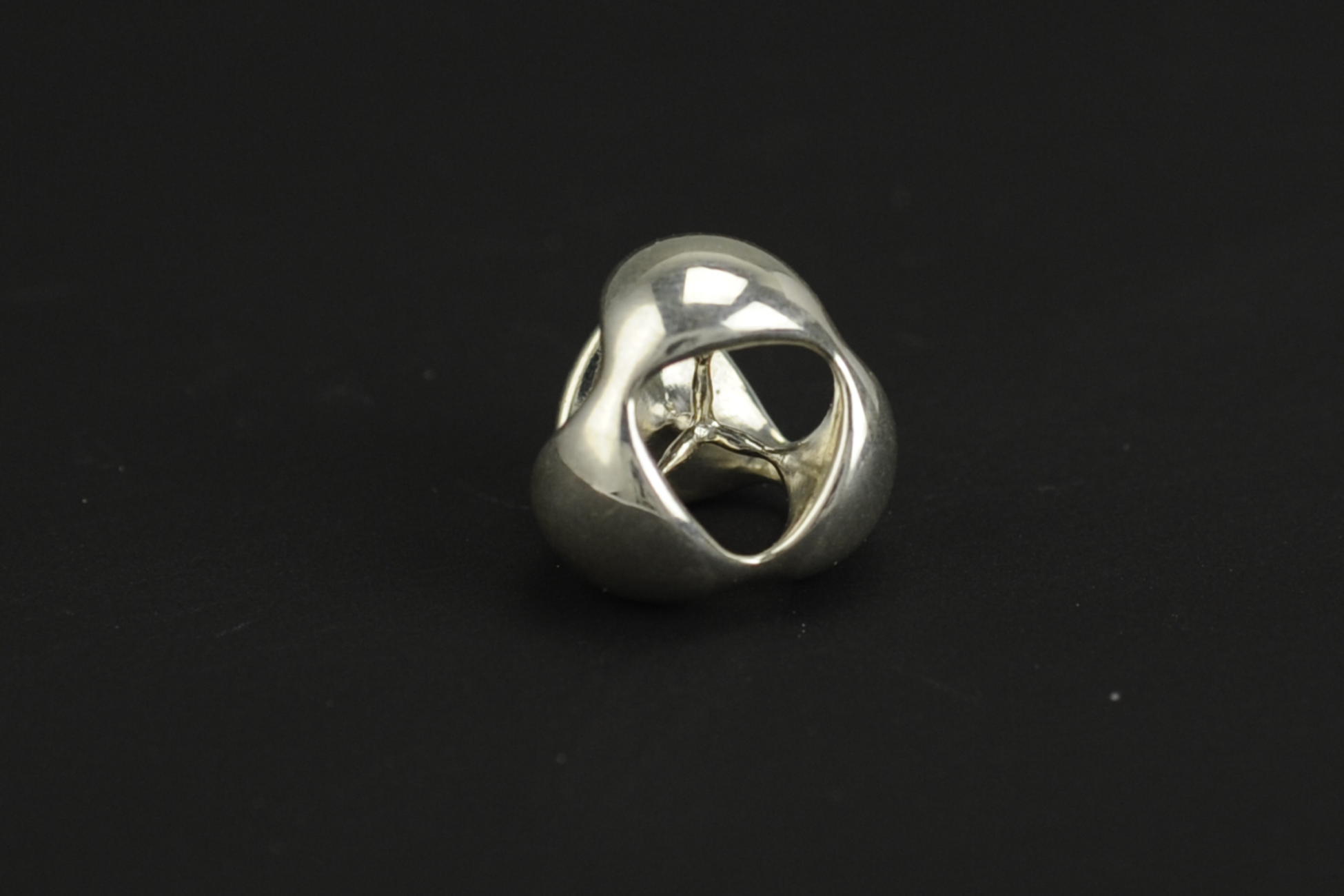
Our "six pillows' secret pendant" is a very special piece of math jewelry. Its shape is given by a single equation. Have you ever seen a pendant like this before?
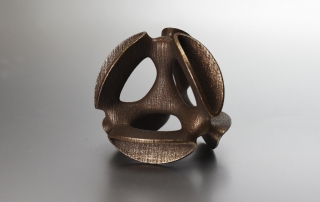
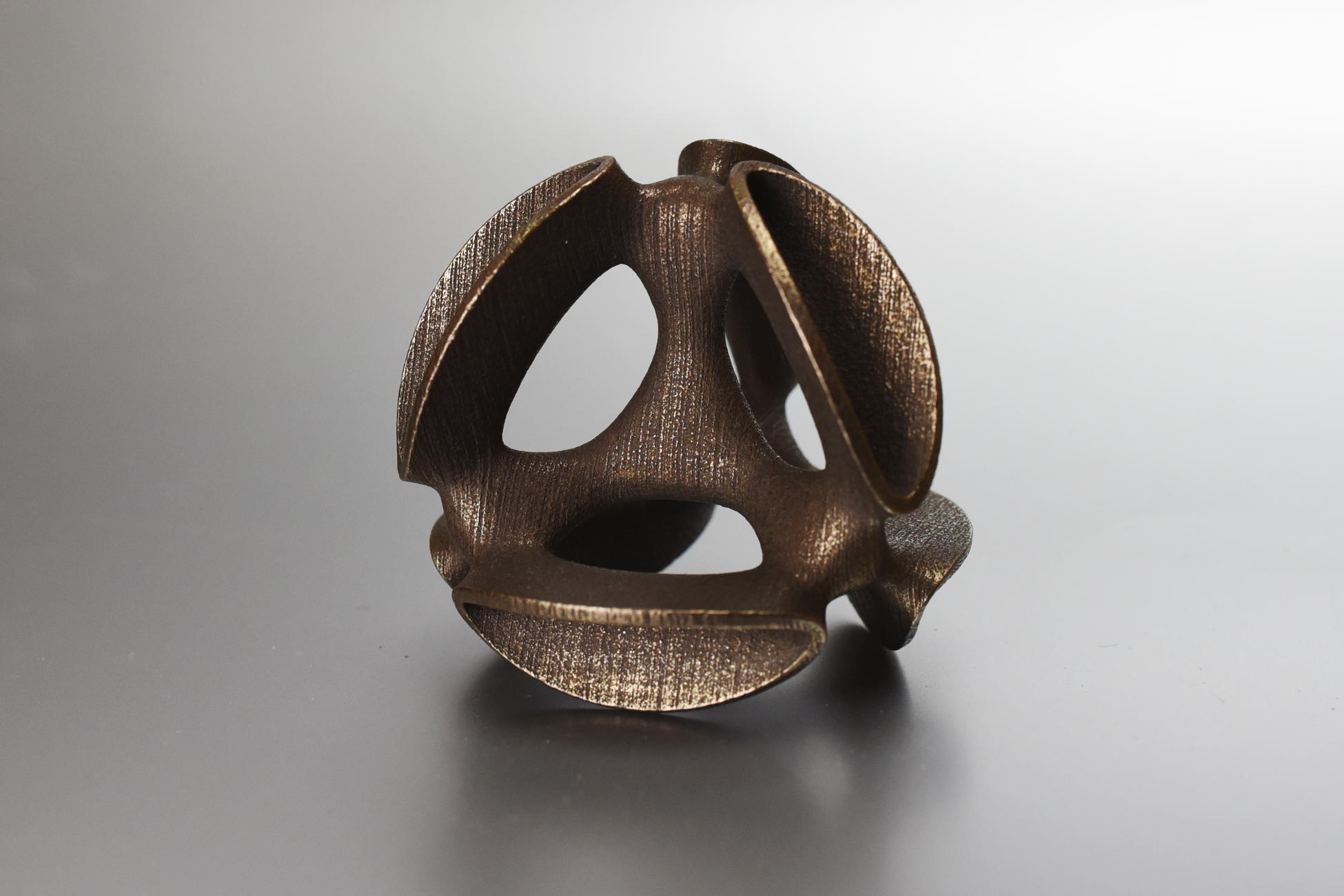
The photo shows a smoothed Kummer surface in steel (inflated with bronze). This post also features links to plastic versions of this shape. The Kummer surface is a classic from the 19th century; our model is a smoothed version of it.
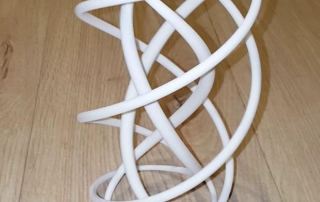
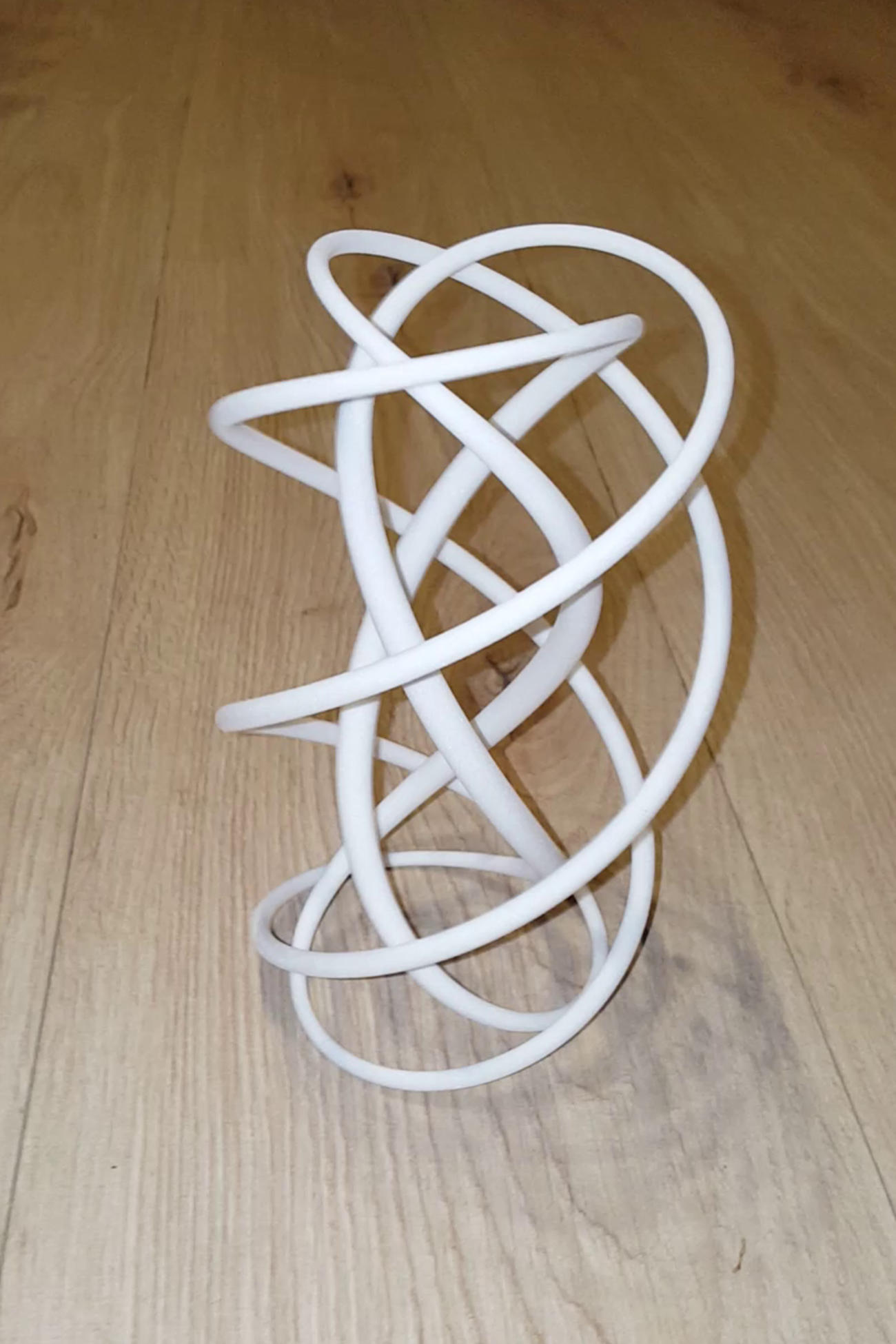
This object looks like a piece of art. But in fact, it is "just" a mathematical curve, called 7/3 torus knot. Imagine a donut, and then tie a cord around it in some interesting way.